The short answer
Most range hood problems, such as weak suction, loud or rattling blowers, dead lights, and unresponsive controls, come down to a handful of repairable parts: the blower motor, fan capacitor, switches or control board, lighting, and ductwork. On a high-end Wolf, Viking, or Thermador hood that fits your cabinetry, repair is usually the practical choice over replacement.
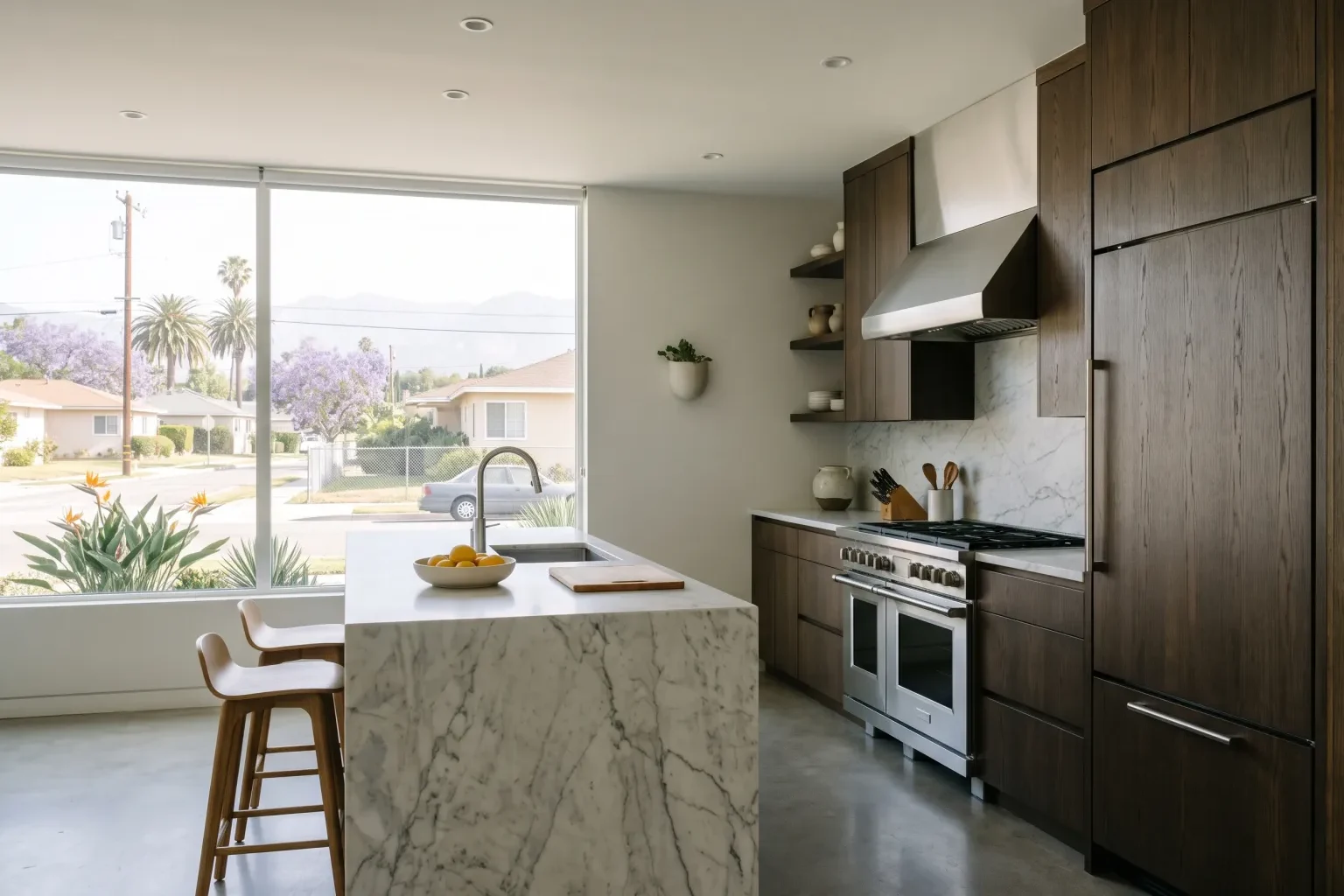
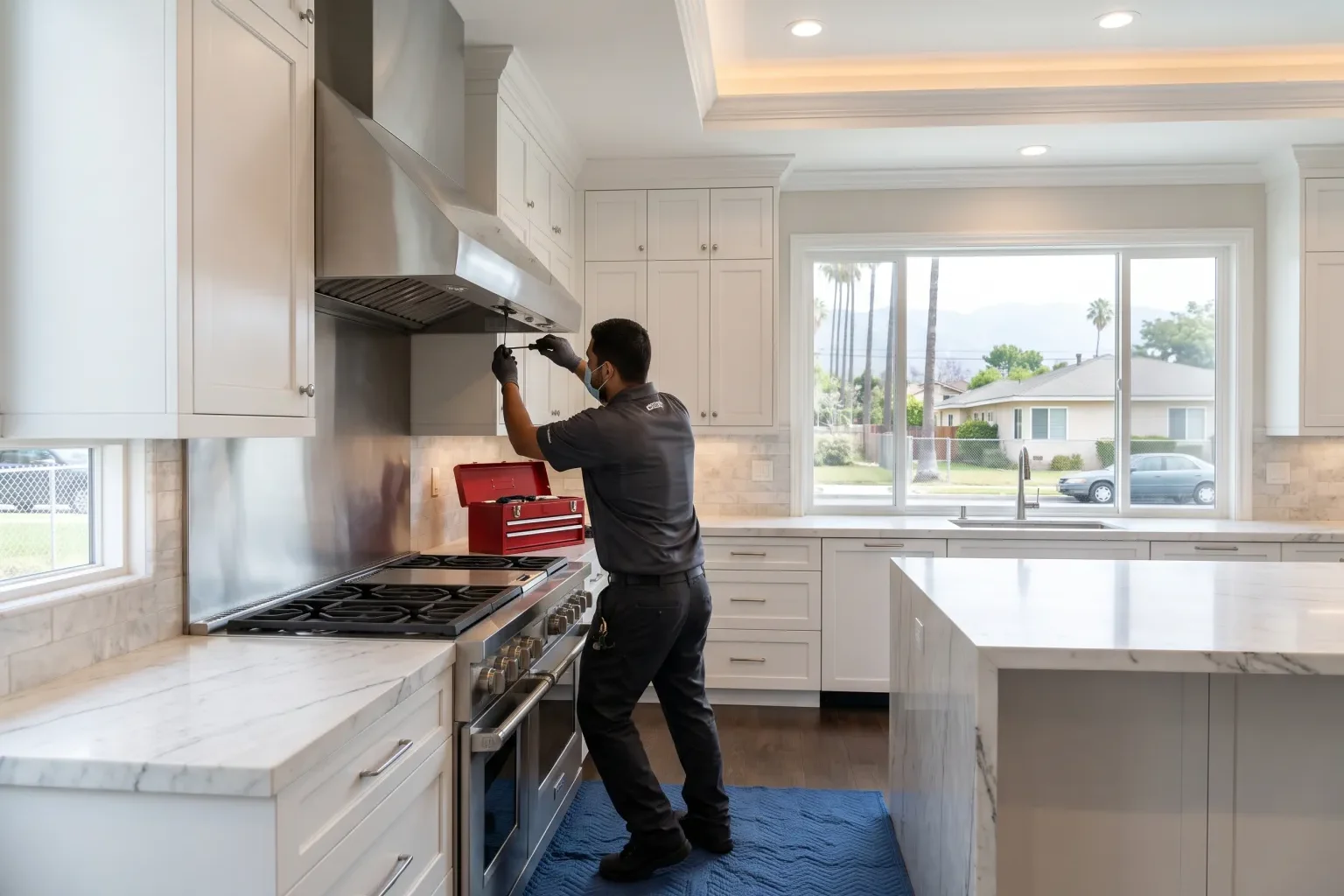
A range hood is easy to ignore until it stops working. Then smoke lingers after searing, grease settles on the cabinets, and the kitchen holds onto cooking smells for days. We repair built-in and professional-style ventilation in homes across Van Nuys and the surrounding San Fernando Valley, including wall-mount chimney hoods, island canopies, custom hood liners hidden inside cabinetry, and downdraft systems. Many of the kitchens we work in pair Sub-Zero refrigeration with Wolf cooking and ventilation, and we also service Viking and Thermador hoods. Sub-Zero itself focuses on refrigeration, so the hood in those kitchens is usually a Wolf or another premium brand. Our goal on every visit is to find the actual fault, explain it plainly, and get your ventilation pulling air the way it should.
Issues we fix
Homeowners usually call us after noticing one of these problems. Some point to a single failed part. Others, like weak suction, can have several causes that need to be checked in order.
- Fan won't turn on at any speed, or only runs on one setting
- Weak suction: smoke and steam escape around the hood instead of being pulled in
- Loud humming, grinding, rattling, or a whistling sound at higher speeds
- Blower starts slowly or needs a push to get going
- Lights flicker, stay dim, or won't come on
- Touch controls or push buttons don't respond, or the hood turns on by itself
- Heat sensor auto-on feature not working, or the fan won't shut off
- Grease dripping from the hood or the filters
- Downdraft vent won't rise or lower
- Remote or in-line blower not responding to the controls at the hood
What our technician checks on a built-in or professional-style hood
We start by confirming the symptom with you and running the hood at each speed. Then we work through the system from the controls to the outside wall or roof cap. Most premium hoods have a few layers: the visible shell, baffle or mesh filters, the blower assembly (in the hood, in-line in the duct, or mounted remotely on the roof or exterior wall), the control module, and the lighting circuit.
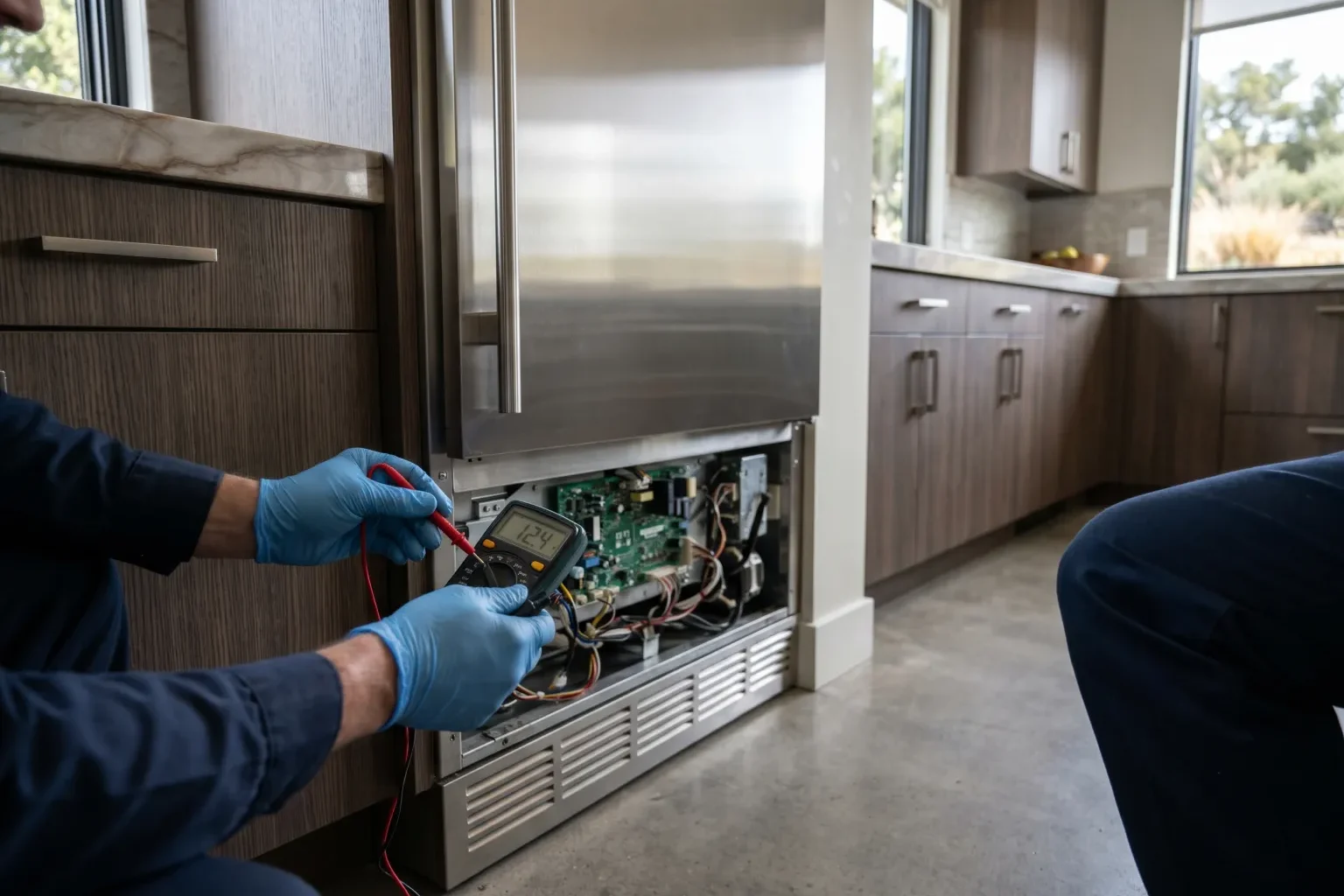
On a typical visit we check the incoming power and wiring connections, then test the switches or touch control board and the fan speed control. We inspect the blower motor and its capacitor, look at the blower wheel for grease buildup or damage that throws it off balance, and check the motor mounts. We also examine the filters and grease channels, test the lights and their transformer or driver, and look at the duct path and damper. A stuck backdraft damper, a crushed flex duct, or a clogged roof cap can make a perfectly good blower seem weak. On hood liners built into custom cabinetry, we also note how the unit is secured and what has to come out to reach the blower.
How Wolf, Viking, and Thermador hoods differ
Each brand builds ventilation a little differently, and that shapes what tends to go wrong. In kitchens designed around Sub-Zero refrigeration, the hood is most often a Wolf. Wolf hoods commonly use internal or remote blowers with electronic controls, and many models include a heat sensor that turns the fan on automatically. The calls we see on these tend to involve control modules, heat sensors, lighting, and blower motors that have worked hard under heavy cooking.
Viking professional hoods are built for high airflow over powerful gas ranges. Their heavy blowers and mechanical or rotary controls hold up well, but switches, fan capacitors, and blower motors do wear, and the baffle filters need regular cleaning to keep grease from reaching the motor. Thermador hoods and downdraft systems lean more on electronic and touch controls, so control boards, wiring connections, and the lift mechanism on downdraft units come up more often. Across all three brands, grease buildup is the common thread behind many noise and suction complaints.
Tell us what your appliance is doing.
Repair or replace a high-end range hood?
With premium ventilation, repair usually makes more sense than replacement. The shell, liner, and stainless work are rarely the problem, and the failing parts (motors, capacitors, switches, boards, lights) can usually be replaced individually. A professional-style hood is also sized and mounted to fit your range, your ceiling height, and often a custom wood or plaster surround. Swapping it out can mean reworking cabinetry, ducting, or electrical, which turns a simple fix into a remodeling project.
Replacement starts to make sense when parts for an older model are no longer available, when the housing itself is rusted or damaged, or when the hood was undersized for your range from the start and you want more capacity. If we think replacement is the better path, we'll tell you why so you can decide with clear information.
What affects the cost of a range hood repair
We don't quote a price without seeing the hood, because the same symptom can have very different causes. The biggest factor is the fault itself. A loose connection or a failed capacitor is a much smaller job than a blower motor or a control board. Parts are the next factor. Brand-specific electronic boards and remote blowers generally cost more than lighting components, and older models may require sourcing time.
Access matters a lot with built-in units. A hood liner tucked inside custom cabinetry, a blower mounted on the roof, or an in-line fan above the ceiling takes more time to reach than a freestanding chimney hood. Duct problems such as a crushed run or a stuck damper add their own work. Once we've diagnosed the problem, we explain the repair and what it involves before any work begins.
How a service visit works
When you contact us, we'll ask for the brand, model number if you can find it (usually on a label behind the filters), and what you're noticing. That helps us come prepared. At the appointment, the technician runs the hood, diagnoses the fault, and walks you through what failed and what the fix involves. If we have the part on hand, we can often complete the repair the same visit. If a part has to be ordered, we schedule a return trip once it arrives. Before leaving, we test every speed, the lights, and the controls, and we'll share any simple care tips, like how often to clean the filters, that can help prevent the next breakdown.