The short answer
Most ice maker problems in high-end refrigerators and undercounter ice machines come from a few parts: the water supply, the fill line, the ice maker assembly, the drain, or the cooling system. On a well-built unit, a targeted repair is usually worth doing. We diagnose the cause on site and explain your options before any work begins.
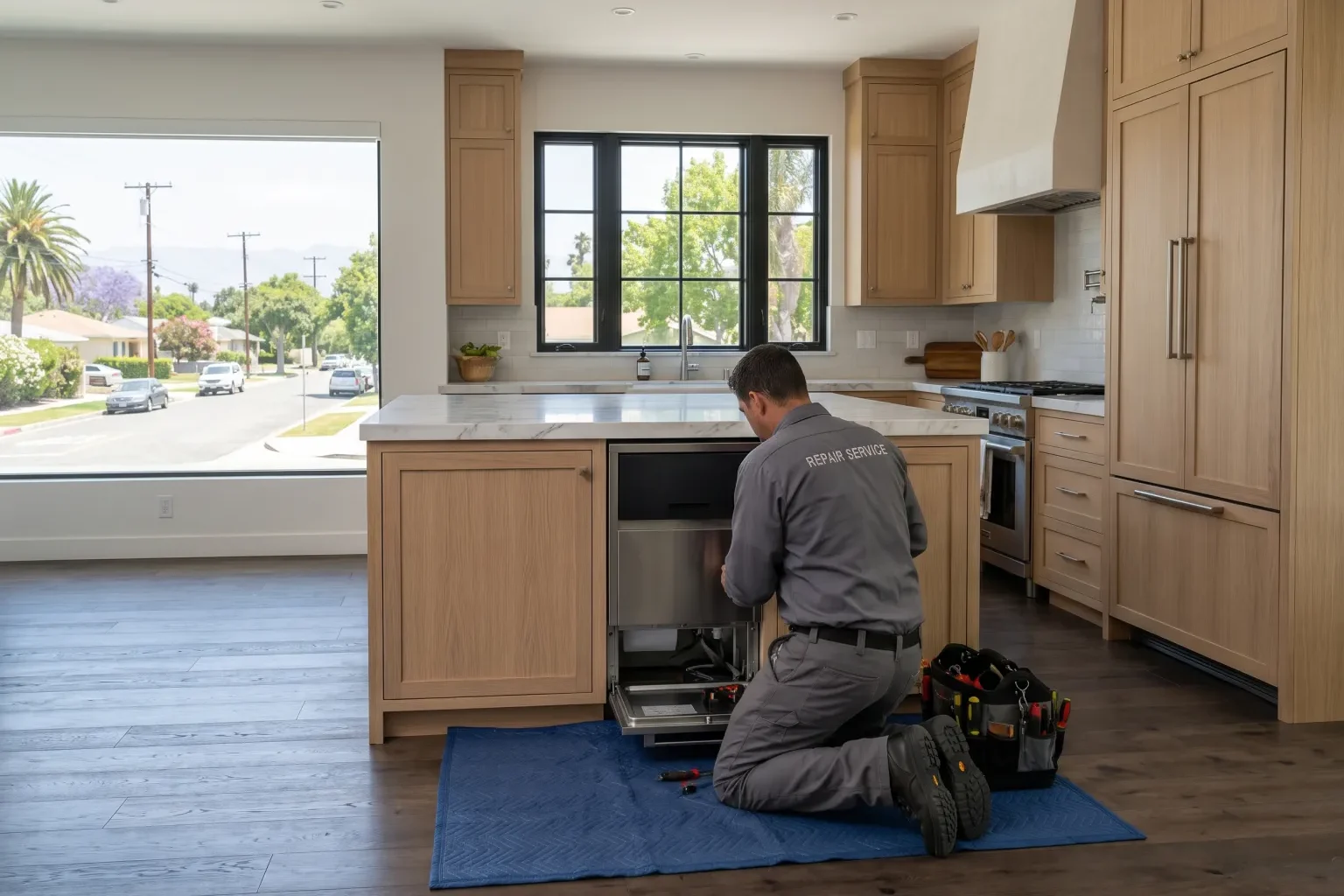
When the ice maker in a built-in refrigerator or undercounter ice machine stops working, the cause is usually something specific: a water valve, a frozen fill line, a clogged drain, a failed module, or a freezer that isn't holding temperature. We repair ice makers in premium kitchens across Van Nuys, Sherman Oaks, Encino, North Hollywood, Studio City, Reseda and the surrounding San Fernando Valley, with a focus on Sub-Zero refrigeration and the Viking and Thermador units often found alongside Wolf cooking appliances. We are an independent repair company, not affiliated with any manufacturer. This page covers what goes wrong, what we check, and how a visit works.
Issues we fix
Ice maker trouble usually shows up in one of a few ways. Telling us exactly what you've noticed, and when it started, helps us narrow it down before we arrive.
- No ice at all, or the bin stops filling even though the freezer is cold
- Slow production, or small, hollow or misshapen cubes
- Ice that clumps, freezes into a solid block, or tastes or smells off
- Cloudy ice from a unit that normally makes clear ice
- Water leaking under the refrigerator or pooling inside the freezer
- Frost or ice build-up around the fill tube or ice maker
- An undercounter ice machine that isn't draining or shows standing water
- Error codes or indicator lights on the control panel
- Clicking, buzzing or grinding when the ice maker tries to cycle
- An ice maker that runs constantly or overfills the bin
What our technician checks on a built-in or undercounter unit
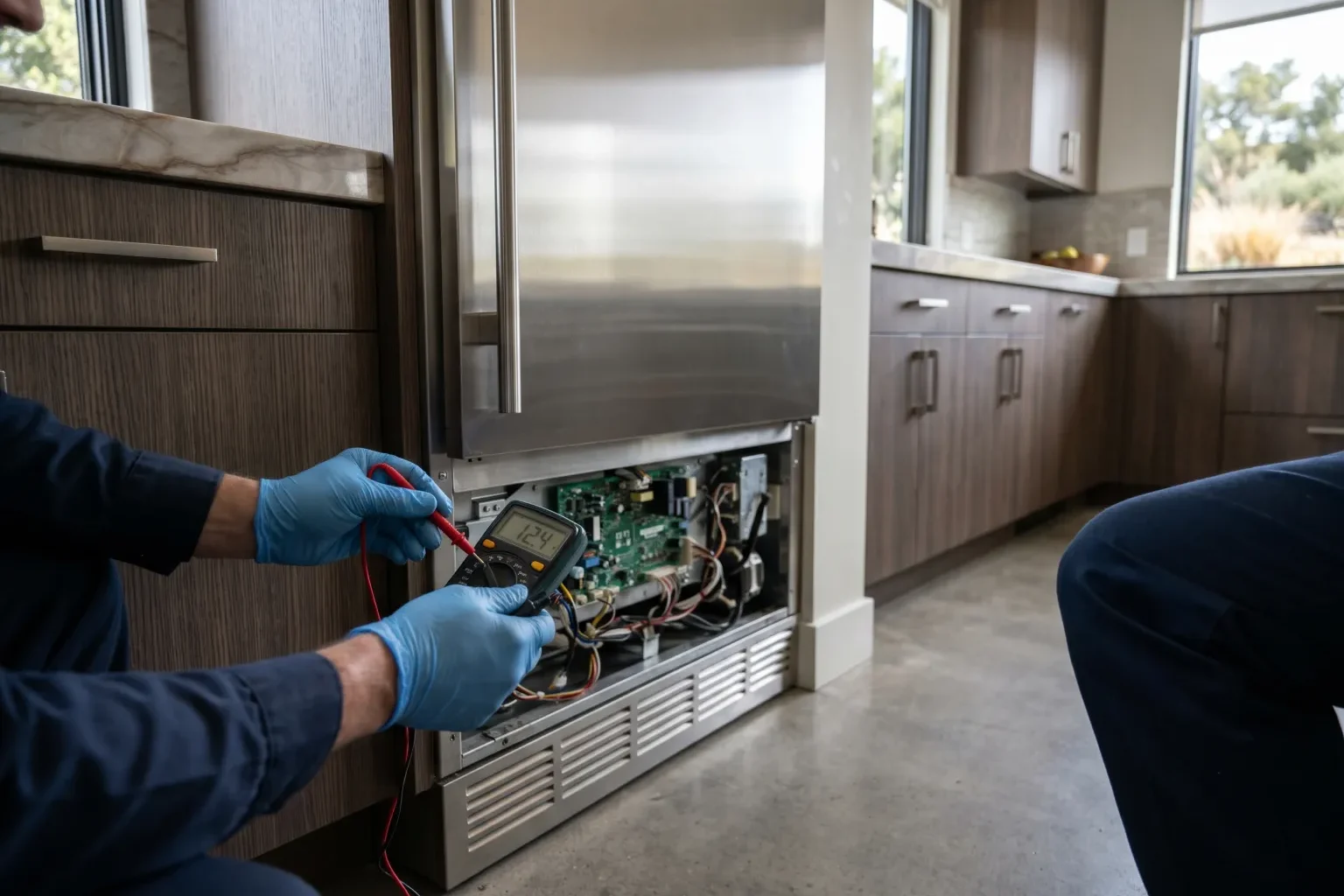
We start by confirming the basics, because a surprising number of ice maker complaints come from outside the ice maker itself. We check the freezer temperature, the water supply valve behind or beside the unit, incoming water pressure, and the condition of the water filter. A clogged filter or a partly closed supply valve can cut ice production without any part being broken.
From there we test the water inlet valve, inspect the fill tube for ice blockage, and run the ice maker through a test cycle to check the motor, ejector, heater and shutoff. On undercounter clear-ice machines, we also look at the water pump, the drain pump or gravity drain line, the evaporator plate for scale, the cutter grid, and the condenser. Built-in units often sit in tight custom cabinetry, so we check for restricted airflow at the grille, which can make a refrigerator struggle to cool, especially during hot Valley summers when inland areas run much warmer than the coast.
How Sub-Zero, Viking, Wolf and Thermador kitchens differ
Sub-Zero makes ice in two main ways: automatic ice makers inside the freezer section of its built-in and integrated refrigerators, and standalone undercounter ice machines. Freezer ice makers tend to have water supply, fill tube and module issues, while the undercounter machines are more sensitive to drain problems, mineral scale and airflow around the condenser.
Viking built-in refrigerators and undercounter ice machines share many of the same failure points, though layouts and component access vary by model and age. Older units sometimes need more care sourcing parts, which can affect timing.
Wolf makes cooking appliances rather than ice makers, but many Wolf kitchens pair those ranges and cooktops with Sub-Zero refrigeration, so we often work in homes with both. Thermador column refrigerators and freezers include ice makers that can develop fill, dispenser and control issues; because they are fully integrated into cabinetry, access is part of the job.
Tell us what your appliance is doing.
Repair or replace a high-end ice maker
On premium refrigeration, a failed ice maker rarely means the whole unit is finished. The ice maker assembly, inlet valve, drain pump and similar parts are designed to be replaced, and the refrigerator or freezer itself often has plenty of life left. Replacing a built-in unit can also mean cabinetry, panel and sizing work, so repair is usually the more practical choice.
Replacement is worth considering when the sealed cooling system has failed on an older unit, when several major components are wearing out at once, or when parts for an older model are no longer available. We'll tell you plainly what we found and what we'd consider in your position, then you decide.
What affects the cost of an ice maker repair
We don't quote a number until we know the cause, because ice maker repairs range from a simple adjustment to a larger component replacement. The main factors are the fault itself, the part involved, and how easy the unit is to reach.
A clogged filter, frozen fill tube or drain blockage is generally a smaller job than replacing an ice maker module, water pump or control board. Parts for premium brands vary in cost and availability. Units built into custom cabinetry, or installed with panels that must be removed, take more time to access safely. Scale build-up from hard water can also add cleaning to the job. We explain the diagnosis and the repair before starting any work.
How a service visit works
When you contact us, we ask for the brand, model if you have it, and the symptoms you've noticed. If the ice maker is leaking, shutting off the water supply valve to the refrigerator or ice machine can limit damage until we arrive.
At the visit, the technician inspects the unit, tests the relevant parts and explains what's wrong in plain terms. If the repair can be done with parts on hand, we can often complete it the same visit. If a part needs to be ordered, we tell you what's needed and schedule a return. After the repair, we run the ice maker through a cycle to confirm it's filling and harvesting properly. Keep in mind that a freshly repaired ice maker usually needs some time before the bin fills.