The short answer
Most outdoor grill problems come from a short list of parts: igniters, blocked burners, gas regulators and valves, and worn heat-distribution parts. A technician can usually diagnose these on the first visit, and repair is often the practical choice for a well-built unit whose firebox and housing are still sound.
A built-in grill is usually the centerpiece of an outdoor kitchen, so when a burner won't light or the heat goes uneven, the whole setup feels off. We repair premium outdoor grills and the outdoor kitchen appliances around them for homeowners in Van Nuys and the surrounding San Fernando Valley cities. Our technicians work on grills and outdoor cooking equipment from Wolf and Viking, Sub-Zero outdoor refrigeration that often sits beside them, and Thermador cooking appliances inside the home. We find the actual fault, explain it plainly, and fix it so you can cook with confidence again.
Issues we fix
Outdoor grills live a harder life than indoor ranges. In the Los Angeles area, dry summers, hot inland temperatures in the Valley and dusty Santa Ana wind spells all take a toll on igniters, gas parts and seals. These are the problems homeowners call us about most often.
- Burners that won't ignite, or only light with a match
- Clicking igniter with no flame, or no clicking at all
- Weak, low or yellow flames instead of a steady blue flame
- Uneven heat, with hot and cold zones across the grates
- A burner that lights and then goes out
- Infrared or rear rotisserie burner not heating
- Rotisserie motor not turning
- Flare-ups, grease buildup or a burner that won't adjust down
- Control knobs that stick, spin freely or don't change the flame
- Interior or knob lights not working
- Gas smell near the grill (shut off the supply first and contact your gas utility if the smell is strong)
What our technician checks on a built-in grill
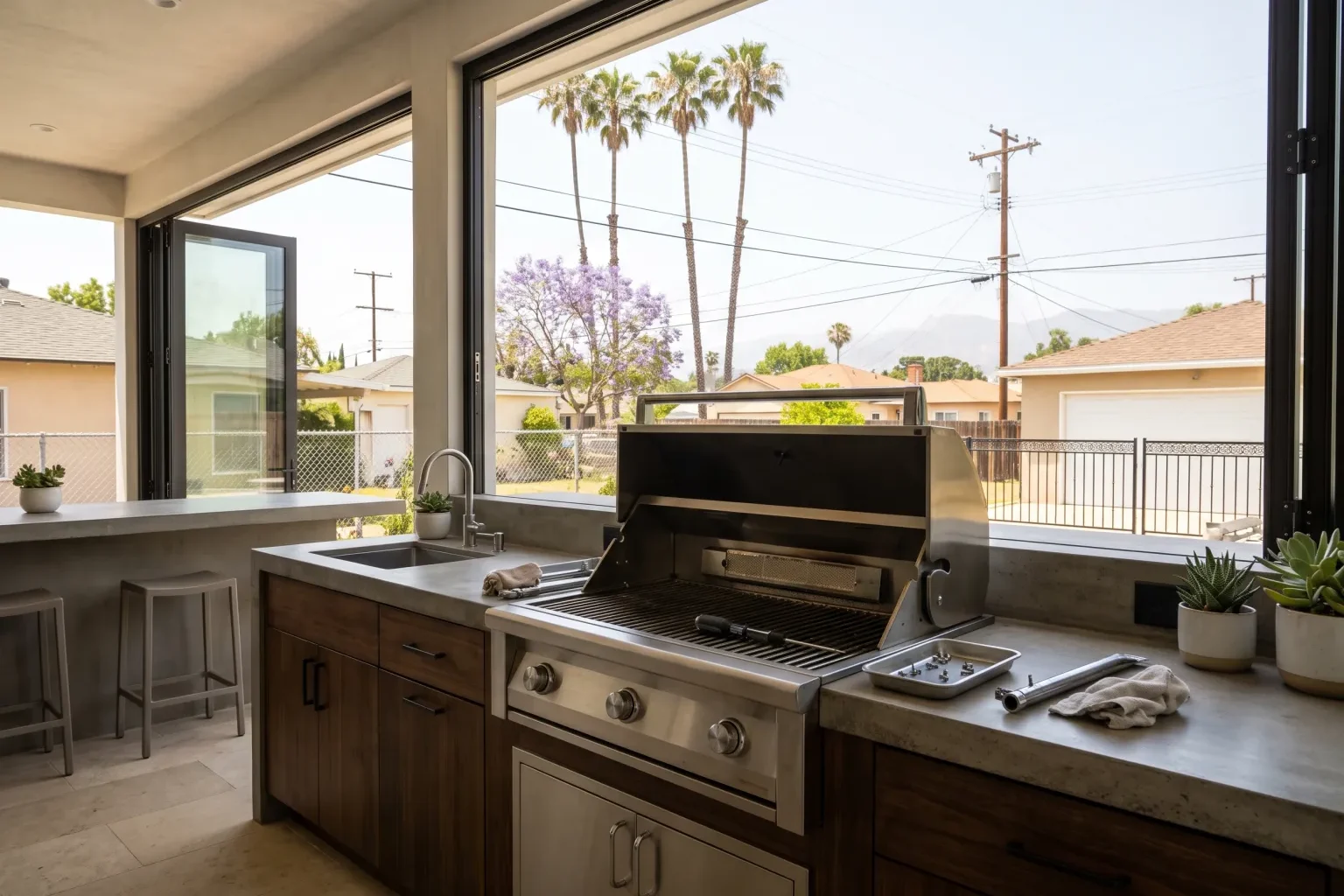
A built-in or professional-style grill is set into masonry or custom cabinetry, which affects how the technician reaches the gas train and wiring. We start with the symptom you describe and work through the system in order, rather than swapping parts and hoping.
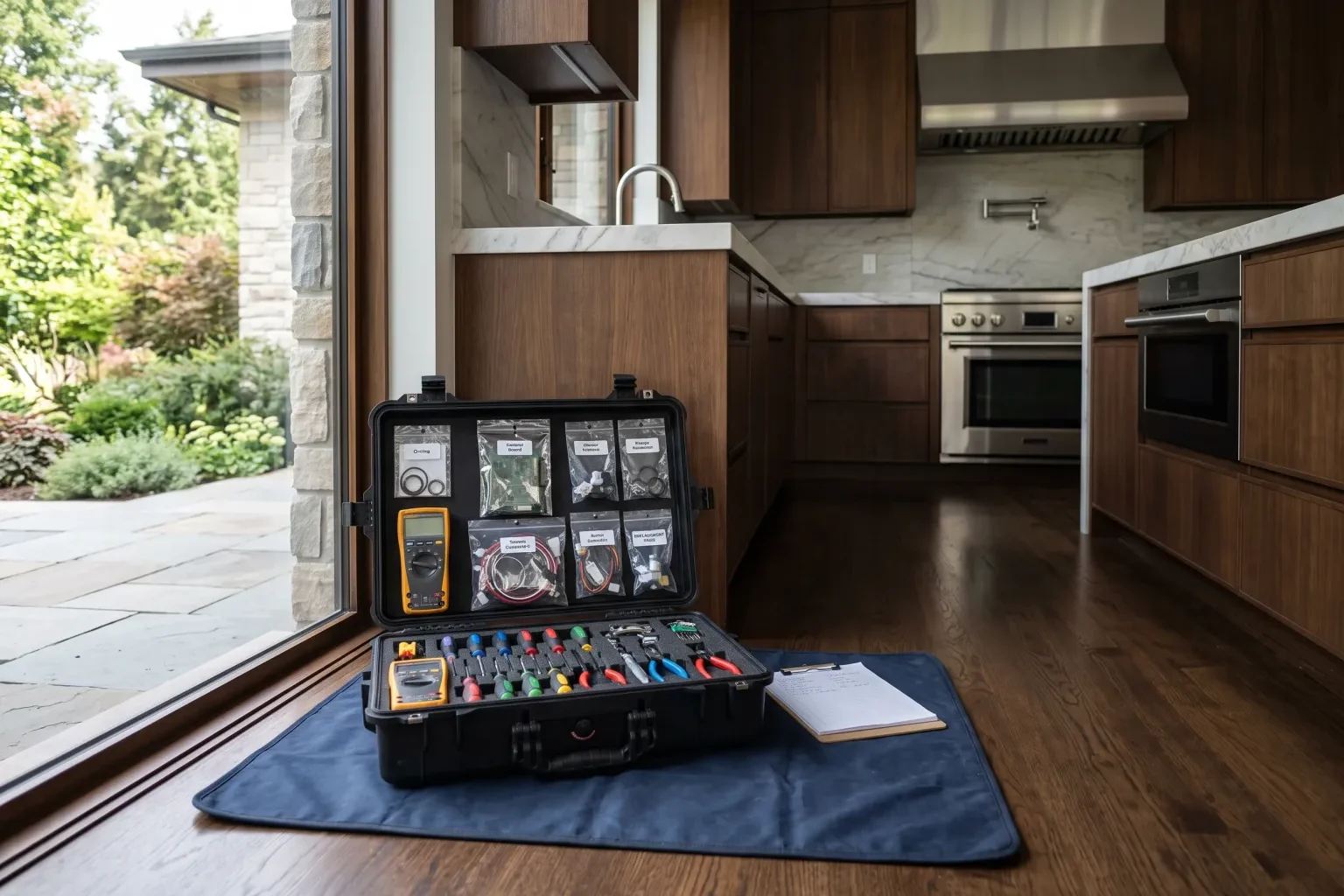
On a typical visit we check the ignition system first: the battery or power supply, the spark module, igniter wires and electrodes, and the gap between the electrode and the burner. Next we inspect the burners and their venturi tubes. Spiders and insects like to nest in these tubes, and a partial blockage is one of the most common causes of weak or lazy yellow flames.
From there we look at gas delivery: the regulator, the manifold, each control valve and the orifices. We confirm the grill is set up correctly for natural gas or propane, since a mismatched orifice or regulator causes poor flame and uneven heat. We also look at flame tamers, briquette trays and the firebox for warping, rust-through and grease that can cause flare-ups. If your grill has a rotisserie, infrared burner or lights, we test those circuits too.
How the brands differ in what tends to fail
Wolf outdoor grills are built around heavy stainless construction and dedicated searing and rotisserie burners. Over time, the parts we see wear most are igniter electrodes, the rear infrared burner and the control valves that get daily use. Because the build quality is high, a worn component usually doesn't mean the grill is at the end of its life.
Viking outdoor grills come in several generations, and older units in particular can show wear on igniters, burner ports and heat-distribution parts after years outdoors. Depending on the model, parts availability can vary, so we confirm what's obtainable before recommending a path.
Sub-Zero outdoor refrigeration is often installed in the same island as the grill. Heat and dust from a nearby grill can push those units harder, and we can check the refrigerator while we're on site. Many of our customers also have Thermador ranges, rangetops or cooktops indoors, and we service those as well, so one visit can cover more than one appliance.
Tell us what your appliance is doing.
Repair or replace a high-end grill
For a premium grill, repair usually makes sense when the firebox, housing and grates are structurally sound. Igniters, valves, regulators, burners and flame tamers are replaceable parts, and fixing them restores normal performance without disturbing your countertop or cabinetry. Replacing a built-in grill can also mean matching the cutout exactly, which is not always simple with a different model.
Replacement starts to make more sense when the firebox is rusted through, the burners and valves have all failed at once, or parts for an older model are no longer available. We'll tell you what we see and lay out both options honestly so you can decide.
What affects the cost
We don't quote a number without seeing the grill, because the cost depends on a few specific things. The fault itself matters most: replacing an igniter electrode is a very different job from replacing a manifold or several control valves. Parts are the next factor, since premium brand components and parts for older or discontinued models vary in cost and availability.
Access also plays a role. A grill set deep into a stone island or custom cabinetry may need more time to reach the gas connections and wiring underneath. After diagnosis, we explain the repair and the cost before any work starts.
How a visit works
When you contact us, tell us the brand, model if you have it, and what the grill is doing. That helps the technician come prepared. At the appointment, the technician inspects and tests the grill, finds the cause and walks you through the findings.
If you approve the repair and the part is on hand, we can often complete it the same visit. If a part needs to be ordered, we schedule a return trip to install it. Before leaving, the technician lights every burner, checks the flame and confirms the grill is working safely.